
Fuel Misuse Can Kill Your Credibility
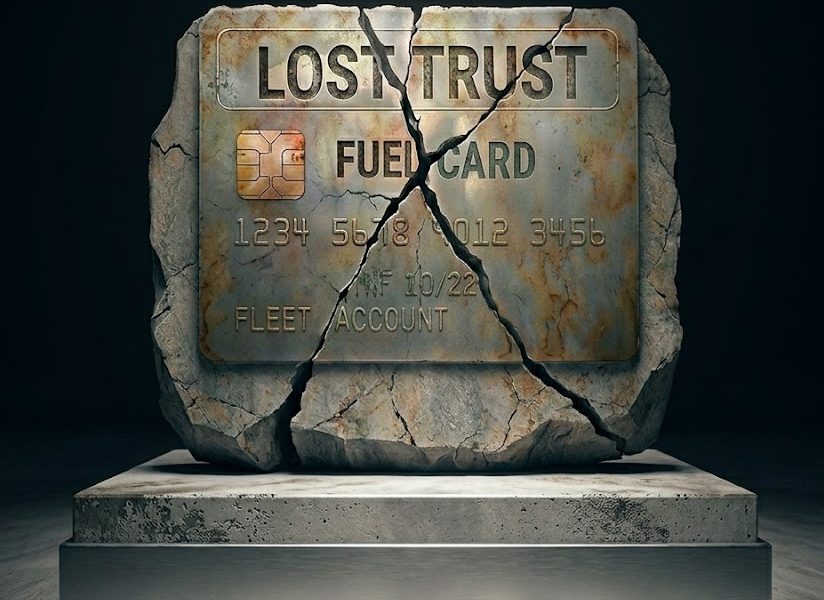
Let me be direct about something the fleet industry sometimes dances around: fuel misuse is not always theft, but that does not mean it is not a serious problem. In fact, the everyday misuse that most fleets deal with, including shared cards, wrong assets being charged, duplicate fueling, portable cans, and off-hours transactions, poses just as serious a threat to your program’s credibility as outright fraud does.
When a city council member or a county commissioner sees a line item that does not add up, they are not sitting there analyzing intent. They are looking at a result. And if your fleet program cannot immediately explain that result with confidence, the story writes itself. While the explanation you eventually provide may be completely accurate, the damage to your credibility is likely already been done during this period.
Intent Does Not Fix the Record
I have worked with fleet operations where the staff was entirely well-intentioned and the misuse was entirely systemic. Drivers sharing cards because individual vehicle cards were unavailable. Fuel being charged to the wrong unit because the automation system was not calibrated correctly. Supervisors approving overtime fueling that was legitimate but looked suspicious in the data because of when and where it occurred.
In every one of those cases, the fleet manager had an explanation. But having an explanation is not the same as having clean data. The explanation has to be given to finance, auditors, elected officials, and every time that explanation is required, it costs the fleet manager credibility even when the explanation is perfectly valid. Repeated explanations eventually raise the question of whether the program is being managed tightly enough to prevent the situations requiring explanation in the first place. You spend organizational capital defending transactions that should not have needed defending. This is the credibility trap that misuse creates, even unintentional misuse.
Common Scenarios Worth Knowing
In my experience, the most common fuel misuse patterns in public fleets follow a predictable set of categories. Shared card use, where one driver’s credential is used for multiple vehicles, is probably the most widespread. It is usually a convenience issue rather than a dishonesty issue, but it produces data that is impossible to audit accurately. When mileage, consumption, and asset history cannot be tied reliably to a specific vehicle, lifecycle analysis and maintenance planning both suffer.
Wrong asset coding is another common issue. A truck gets fueled but the transaction posts to a different unit number because of a driver input error or a system glitch. The actual fuel consumption was real, but the records are wrong. When those records feed into lifecycle cost analysis or budget projections, the errors compound over time. A vehicle that appears to consume less fuel than it actually does will look more cost-effective than it is, potentially influencing replacement decisions incorrectly.
Duplicate fueling, where a tank that was filled earlier in the day gets refilled again under questionable circumstances, is less common but more serious when it occurs. Without transaction-level controls that check time since last fill and volume relative to tank capacity, it can go undetected for extended periods. By the time it surfaces in a periodic review, the pattern may be well established and the amounts significant.
Off-hours fueling is another category worth watching. Transactions occurring outside normal operational hours are not always problematic, but they warrant scrutiny. Emergency response, shift work, and after-hours maintenance are all legitimate reasons for off-hours fueling. The issue arises when no operational context exists for the transaction and no exception process was followed.
Validation Prevents Explanations
The shift I advocate for and have seen work consistently in high-performing fleets, is moving from documentation to prevention. Real-time transaction validation, where the system is checking the transaction against the vehicle’s tank capacity, the time since last fill, the expected mileage, and other defined parameters, catches problems at the pump rather than in the exception report.
That is a fundamentally different operational posture. Instead of explaining what happened last week, you are preventing the wrong transaction from completing today. The fleet manager who can walk into an audit and demonstrate that the system declines anomalous transactions in real time is in a completely different position than the one who is explaining why something was not caught until three days after it occurred.
Credibility in fleet management is built transaction by transaction. It is also lost that way. The difference between the programs that maintain their credibility over time and those that are perpetually in a defensive posture is almost always about where in the process the control is applied: before the transaction or after it.